





posted 12th December 2025
Caring for an aging parent or loved one comes with many emotions—love, concern, and sometimes even uncertainty. One of the hardest questions families face is: “How do I know when it’s time to get home care?”
The truth is, the signs often appear gradually. You may notice little changes at first—a missed appointment, a messy kitchen, or increased confusion. Over time, these small concerns can grow into safety risks that make daily life difficult and potentially dangerous.
Recognizing the signs early allows families to get support before a crisis happens. Below are the most common indicators that it may be time to consider home care for your loved one.
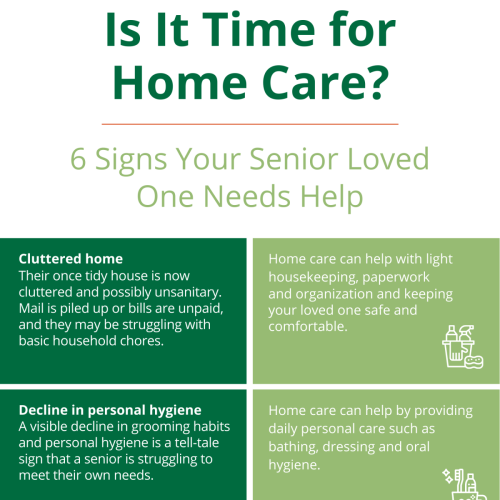
1. A Decline in Personal Hygiene
As daily tasks become more challenging, seniors may struggle with:
Bathing or showering
Brushing teeth or hair
Changing clothes regularly
Keeping up with overall grooming
A noticeable change in appearance or hygiene often signals the need for assistance with personal care.
2. Forgetting Medications or Missing Appointments
Managing multiple medications can be overwhelming. Warning signs include:
Skipping doses
Taking too much
Forgetting refill dates
Missing medical appointments
Medication mismanagement is one of the most common reasons families seek home care support.
3. Increased Falls or Difficulty Moving Around
If your loved one is having trouble getting up from chairs, holding onto furniture for balance, or showing new bruises, it may be a sign of mobility decline. Falls are a major risk for older adults and often lead to hospitalization. A caregiver can greatly reduce this risk by offering mobility assistance and ensuring the home is safe.
4. Withdrawal from Social Activities
Isolation can negatively impact both mental and physical health. You may notice:
Less interest in hobbies
Avoiding friends or family
Increased sadness or anxiety
Irritability or personality changes
Companionship is a powerful part of home care. Having someone to talk to, share meals with, or simply spend time with can make a world of difference.
5. Difficulty Managing the Household
Daily household responsibilities may become overwhelming. Look for signs such as:
Stacks of unopened mail
Dirty dishes piling up
Laundry not being done
Spoiled food in the fridge
Unpaid bills or missed payments
Home care helps keep the household running smoothly and safely.
6. Changes in Eating Habits or Weight Loss
Poor nutrition can happen when cooking becomes difficult or unsafe. You may notice:
A nearly empty fridge
Relying on snacks instead of meals
Unintentional weight loss
Eating the same food every day
Meal prep and grocery assistance are simple ways caregivers support healthier eating habits.
7. Caregiver Burnout
Sometimes the clearest sign comes from family caregivers themselves. If you’re feeling:
Exhausted
Emotionally overwhelmed
Guilty or stressed
Unable to juggle responsibilities
…it may be time to accept help. Home care is not about replacing family—it’s about providing support so everyone can maintain balance and peace of mind.
How Home Care Can Make a Difference
Home care allows seniors to remain in the place they feel most comfortable—their home—while receiving the support they need. Services can include:
Personal care (bathing, dressing, grooming)
Transportation to appointments
Meal preparation
Light housekeeping
Medication reminders
Companionship
Safety supervision
With the right care, your loved one can stay independent longer and enjoy a higher quality of life.
Final Thoughts
Noticing one or more of these signs doesn’t mean your loved one is losing independence. Instead, it may be the perfect time to introduce support that enhances their safety, comfort, and dignity at home.